Vaccines for travelling abroad
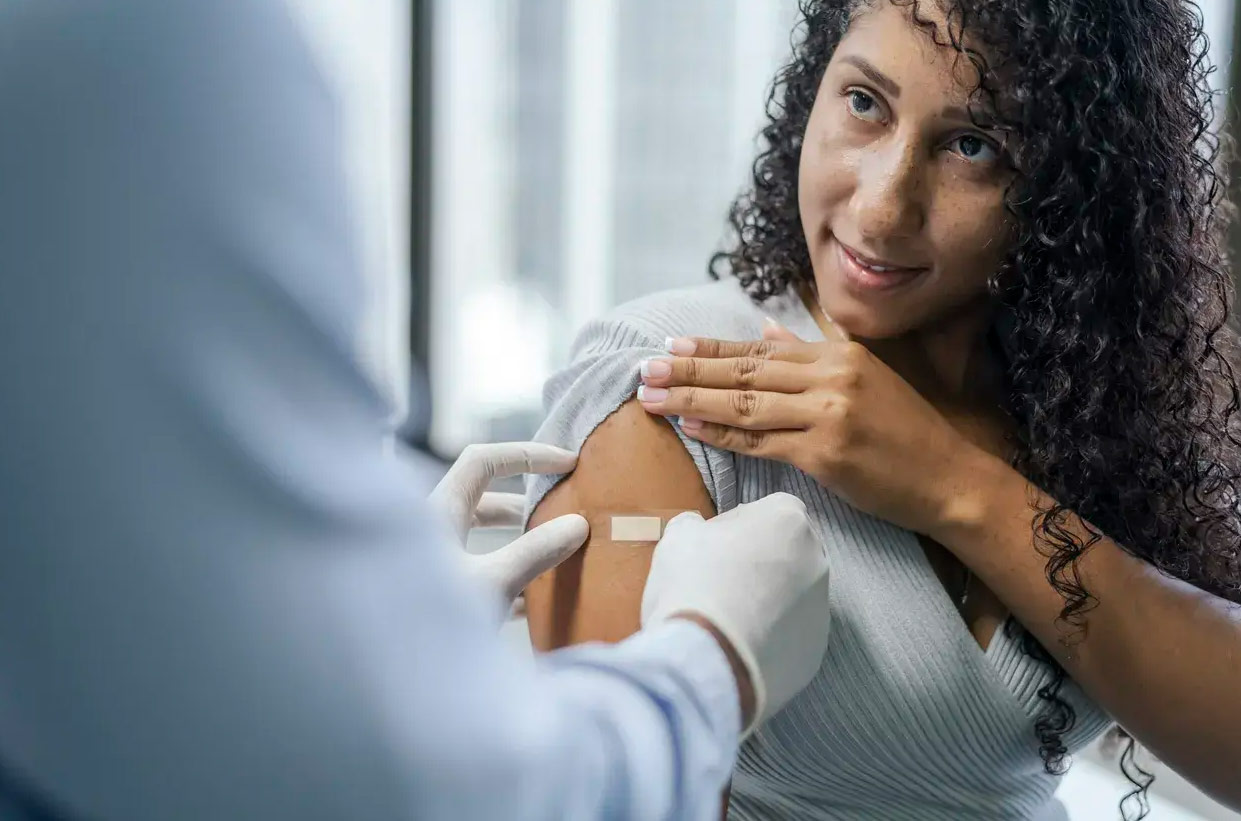
The vaccines recommended for travelling depend on the destination, the trip's duration, the type of activities which will be done and the traveller's previous state of health.
Precautions to protect our health
Prevent diseases
Vaccinations for travelling abroad are essential in certain countries.
Country-specific requirements
Find out in advance about the vaccination requirements of the country you intend to visit.
International Certificate of Vaccination
Commonly referred to as the “yellow card”, it may turn out to be necessary to prove that you have been properly vaccinated.
Preliminary planning
Consult the traveller's doctor at least four to six weeks before the trip. Some vaccines require several doses or a certain amount of time for the body to develop immunity.
To take into account
Compulsory vaccines for travelling abroad
These are the vaccines for travelling abroadwithout which you will not be able to enter certain countries, especially countries in Africa, Asia and South America. Additionally, some destinations require an International Certificate of Vaccination.
Yellow fever
It is endemic in several countries in sub-Saharan Africa and South America, so it is a must if you are a tourist. You must get vaccinated if you are visiting Angola, Benin, Burkina Faso, Burundi, Cameroon, Central African Republic, Congo, Côte d'Ivoire, Congo, Equatorial Guinea, Gabon, Gambia, Ghana, Guinea, Guinea-Bissau, Liberia, Nigeria, Senegal, Sierra Leone, South Sudan, Togo and Uganda. As well as both Guianas, Paraguay and Suriname. It is also advisable in Chad, Ethiopia, Kenya, Mali, Mauritania, Niger, Sudan, Argentina, Bolivia, Brazil, Colombia, Ecuador, Panama, Peru, Trinidad and Tobago, and Venezuela.
Vaccination is recommended all year round, but especially before the rainy season. The vaccination process involves a single dose that must be given at least 10 days before the trip, which will ensure lifelong immunity.
Meningococcal meningitis
You will need to be vaccinated to enter Saudi Arabia. This country also requires a vaccination certificate, which lasts three or five years depending on the type of vaccine. It is also advisable for anyone travelling to sub-Saharan Africa that is going to visit what is called “Africa's meningitis belt”. It includes 26 countries from Senegal to Ethiopia. They are parts or all of Gambia, Senegal, Guinea-Bissau, Guinea, Mali, Burkina Faso, Ghana, Niger, Nigeria, Cameroon, Chad, Central African Republic, Sudan, South Sudan, Uganda, Kenya, Ethiopia and Eritrea. It must be administered at least ten days before travelling, in a single dose for meningococcal ACWY vaccines and in two doses for meningococcal B vaccines.
Poliomyelitis
The polio vaccine is mandatory for travellers coming from regions where cases are still reported to certain countries that have already eradicated the disease. Currently, the endemic presence of wild poliovirus (WP1) is limited to Pakistan and Afghanistan. Other countries considered to be at risk of transmission include Democratic Republic of Congo, Mozambique, Myanmar, Niger, Nigeria, Papua New Guinea, Syria, Somalia and Yemen. Some countries require the polio vaccine when travelling to areas where the disease persists, even if it is not endemic in the destination country.
Recommended
Recommended vaccines for travelling abroad
While the above vaccinations are essential for travel to certain foreign countries, there are others that, while not mandatory, are advisable. A number of them are included in the Spanish Social Security vaccination schedule.
Cholera
Predominant in Africa, Central and South America and Southeast Asia. Vaccination with two doses, seven days apart, is recommended. Immunity lasts between six and twelve months.
Typhoid fever
Recommended for trips to places with poor hygiene. If you choose oral administration, it is necessary to take three capsules every 48 hours at least ten days before travelling. If given by intramuscular injection, a single dose should be administered at least 14 days prior to travel. The vaccination can be repeated every three years.
Hepatitis A
The highest risk is in Africa, Southeast Asia and Latin America. It requires two or three doses. Protection starts between two to four weeks after the first dose and lasts up to 20 years. It is recommended that travellers be vaccinated at least two weeks prior to travel, although last-minute vaccination can offer significant protection.
Hepatitis B
The highest rates are found in the Western Pacific and Africa. It is advisable to start vaccination at least six weeks before travel, thus acquiring protection for at least twenty years. The usual schedule includes three doses administered by intramuscular injection: the second after 30 days and the third six to twelve months later. In emergencies, accelerated four-dose schedules (at months 0, 1 and 2, with a booster one year later) can be used. It is also possible to combine hepatitis A and B vaccines. For those over 16 years of age, there is an accelerated schedule of four doses.
Tetanus
If it is the first time, it is advisable to take the dose at least one month before the trip. In this case, the complete dosing schedule includes three intramuscular shots, the first two with a minimum of four weeks between them. A booster is recommended six to twelve months after the second dose.
Rabies
Vaccination against this disease is specially advisable for travellers planning to visit Africa and Asia. The method of administration and time required for immunisation varies depending on the type of vaccine used.
Other travel tips
Other recommendations for travelling abroad
Don't drink water from the tap
Avoid this in countries where potability is not guaranteed to prevent gastrointestinal diseases.
Take medication with you
Make sure you take any prescribed medication with you and enough supply for the length of the trip, as well as any medicine to treat common ailments.
Find out about security
Before travelling, research the security situation in your destination, especially in areas at risk of conflict or natural disasters.
Copies of important documents
Make copies of you passport and credit cards, and keep them in a safe place in case the originals are lost or stolen.
Travel insurance
Take out a travel insurance policy that covers medical emergencies, flight cancellations and loss of luggage to give you peace of mind during your trip. We recommend checking which countries require their visitors to have mandatory travel insurance.
Do you need travel insurance?
At Adeslas, we want you to worry only about choosing your destination because we'll take charge of protecting you. If you are unsure about what travel insurance covers, our travel assistance insurance covers the insured party, their personal belongings and other incidents that may happen during the trip.