Basic mechanical tips
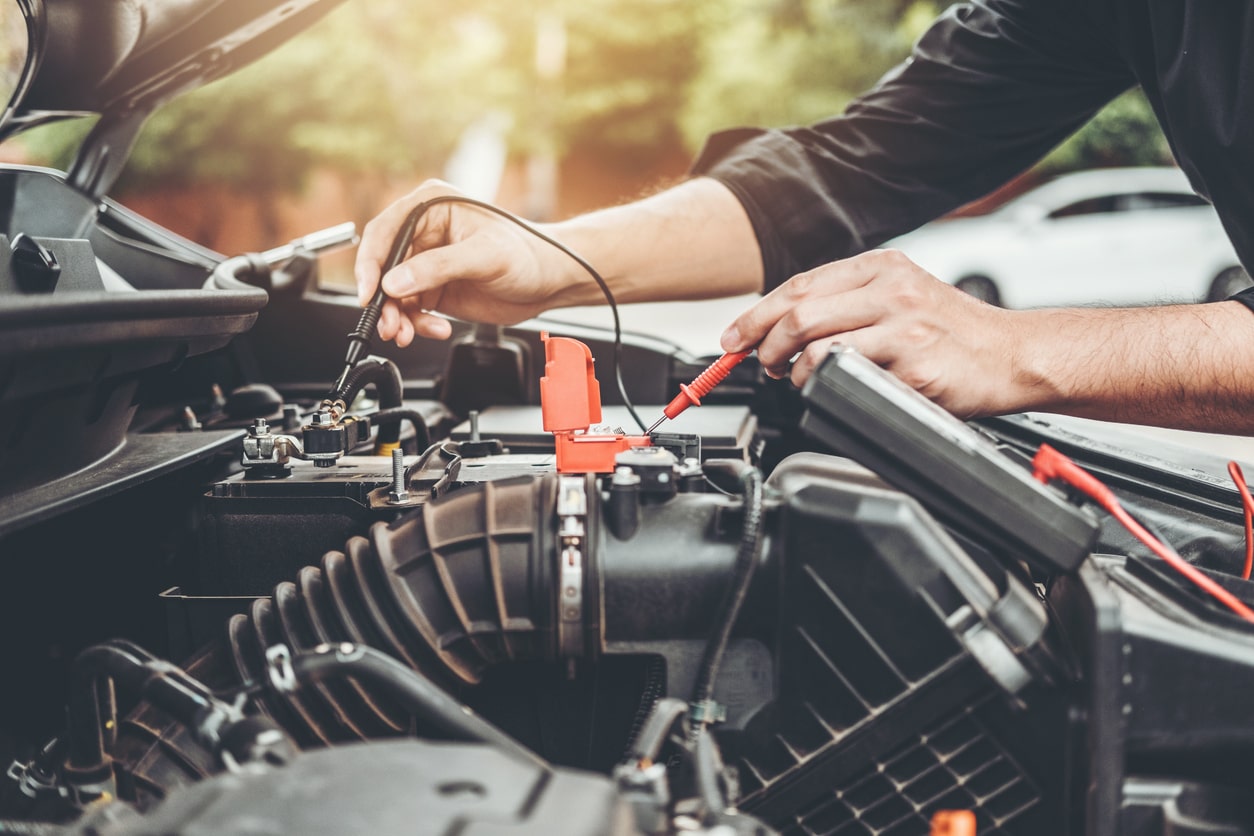
We want to give you some basic mechanical tips to help you to get out of a tight spot at any time and prevent unforeseen events.
Check the oil level
To verify the level of oil, you must park your vehicle on a piece of flat land and wait for the engine to cool down. Locate the oil measuring rod and take it out, making sure that you clean it with a clean cloth. Then push it backwards in the dip tube until the end and remove it again. See where the level of oil reaches. If it lies between the two points of the measuring rod, the oil level is correct. If it is too low, add approximately 100 ml of new oil. Consult your user manual to know what type of oil your vehicle needs.
Measure the level of water and anti-freeze
For the cooling system to work perfectly, it must be at a certain level that you must check constantly. The coolant or the water boil each time you use your vehicle; therefore, it is important to check the water pump since, if it does not have the correct amount, the engine will begin to overheat and it will run the risk of melting. To do so, follow these steps:
- Open the car bonnet and locate the radiator tap close to the front of the vehicle.
- When you find it, you will see a warning sign that will tell you never to open the lid when it is hot.
- Never touch the lid when the car is on or has been used recently.
- The engine must be lukewarm or cold before being able to touch the water lid.
- Use a cloth to turn the radiator lid with your hand. This will help you to protect yourself from the heat and to be able to have a better grip of the lid.
- Look in the hole to see how much water and anti-freeze there are in the radiator. If it is full to the top, everything is perfect. If it is lower, you will need to add water and anti-freeze. Remember that both must be added in equal portions.
Measure the level of brake fluid
Brake fluid is a hydraulic liquid that makes it possible to transfer the force exercised on the brake pedal to the brake cylinders in the wheels. To measure it correctly follow these steps:
- Find the brake fluid deposit situated in the brake’s master cylinder. The cylinder is in the back part of the engine on the driver’s side. A lid covers the deposit.
- Check the level of brake fluid in the cylinder. You will see that the deposit is identified with clearly-marked maximum and low-level lines. Simply observe where the brake fluid is in comparison with the level markers.
- If it is low, add a little bit more but do not exceed the level. Lastly, close the lid well.
Changing a punctured tyre
It is a basic repair provided that you have the necessary tools at hand (jack, spanner and fully inflated spare tyre):
- Park your car in a safe place and check that the handbrake is activated to prevent your car from sliding.
- Loosen the tyre screws with a wrench, but do not take them off fully.
- Place the hydraulic jack under the area of the tyre that you are going to change and make sure you lift it up by the chassis and not by the bodywork.
- Lift it up until there is a gap of four centimetres from the floor.
- Fully remove the screws, but diagonally, when the vehicle has been lifted.
- Remove the wheel, fit the new one and tighten the screws.
- Lower the vehicle, take off the jack and ensure that the screws have been well tightened.
Tyres that have not been correctly inflated increase the possibilities of punctures and reduce fuel efficiency. Regularly control tyre pressure to detect problems in time.
Correctly interpret dashboard signs
It is important to know what our car is trying to tell us when a dashboard light is illuminated. Hence, always have the manufacturer’s manual at hand to be able to identify them and consult the meaning of these warning signs and know what to do in each case.
Check that your battery is in a good state
Your battery is one of the components that may be most affected when the vehicle is not moved for long periods. A flat battery may prevent your car from starting correctly and cause certain electrical systems to fail.
To check its state, follow these steps:
- Ensure that your vehicle is turned off and parked in a safe place.
- Put in the key or press the start button and check that the engine starts correctly.
- Check that the indicator lights in the instrument panel illuminate correctly.
- If you note that the start-up is slow or that the lights lose intensity, your battery may need recharging or replacing.
- If you detect any anomaly, visit a specialised workshop for a full check-up of the electrical system.
Check the state of the tyres
The tyres are the only point of contact between your vehicle and the road, hence keeping them in a good state is essential for your safety.
To check them correctly:
- Visually observe each tyre to check that they have no slashes, cracks or deformities.
- Check that the tread is not excessively worn.
- Check that no object has become lodged in the tyres that could cause a loss of pressure.
- Although they are apparently in good condition, visit a petrol station or specialised centre to check your tyre pressure.
- Also remember to check your spare wheel if your vehicle has one.
Check that your brakes work correctly.
Your braking system is one of the vehicle’s most important safety elements. Before embarking upon any journey, it is advisable to ensure that your brakes work correctly.
Perform a basic check following these steps:
- Start your vehicle and observe the instrument panel.
- Check that no warning lights remain illuminated with respect to the braking system.
- Begin driving with caution and drive a few metres at low speed.
- Press the brake pedal gently to check that the vehicle responds immediately and uniformly.
- If you notice strange noises, vibrations or a deficient response, visit a workshop to carry out a check-up.
Check that your lights work correctly
Your lights enable you to see and be seen by other drivers, hence it is important to verify that they work before driving.
To check them correctly follow these steps:
- Turn on the vehicle's ignition.
- Check that your low beams/high beams, dipped headlights and main beams work.
- Also verify that your indicator lights, brake lights and reverse lights work.
- If possible, request help from another person or use the reflection of a wall to check your back lights.
- Substitute any light bulb that does not work correctly before commencing a journey.
Do you need roadside assistance?
You can contact us 24 hours a day, seven days a week, on the following telephone numbers: