What does the SegurCaixa Adeslas Handyman Plus Service consist of?

What coverages do offer?

Our home insurance policies do not only offer you extensive coverage in the event of claims, rather they are also available for the day-to-day maintenance of your home.

In this regard, we have supplementary guarantees in our policies to make it easier to sort out unforeseen circumstances.


Home insurance coverage

Handyman Plus Service

This coverage includes the visit and labour for one service per year for any of the following tasks:

  • Plumbing

    • Repair or substitution of the cistern mechanism (including materials).
    • Adjustment of a sanitary item (foot wash, bidet and toilet, or their lid), unless it is in a bad state (including materials).
    • Repair of leaks in radiator keys or bleeders (including materials).
    • Repair or substitution of taps or stopcocks (materials up to €90).
    • Adjustment of the valve of the shower tray or bath when it has become displaced, or of the overflow trough (materials up to €18).
    • Bleeding of radiators. Boiler filling is excluded.
    • Sealing with silicone of the bathtub, shower, washbasin, and kitchen sink. Installation of the handheld shower holder and connection, excluding drilling into marble.


  • Blind repairer

    • Repair or unblocking of a blind, substitution of strips or non-metallic blind cords.

    • In the case of an electrical blind, repair of the motor or its remote control.

    • Does not cover work at height.


      *Material not included


  • Locksmith

    • Repair or substitution of the lock of the main door.

    • Does not cover the repair of keys or garage remote controls.


      *Material not included


  • Wood Carpentry

    • Assembly of flat‑pack/kit furniture, with a maximum weight/size to be handled by one person; if two people are required, it is not included.

    • Installation of shelves and bookcases.

    • Replacement or installation on interior wooden doors (handles, knobs, latches, door closers, and small bolts).

    • Replacement of hinges on small cabinet doors in the kitchen, bathroom, and other wooden auxiliary furniture. 
      Installation of finishing plates: floor trim (transition strips between two different types of flooring); wall corner protectors.

    • Minor repair of the operation of one door (entrance, interior, or wardrobe), including the rollers of a sliding door, even if wall chiselling is required. 
      Door planing is also included, but varnishing or painting is not.

    • Minor repair of the operation of a wooden window, including rollers, even if wall chiselling is required.


      *Material not included


  • Metal Carpentry

    • Minor repair of the operation of a metal window, including the rollers, even if wall chiselling is required.


      *Material not included


  • Electricity

    • Placement or replacement of socket and switch faceplates, light bulbs, neon tubes, fluorescent tubes, and starters.

    • Installation of lamps (including ceiling fans with or without lights), wall sconces, or ceiling fixtures, without modifying the wiring. Masonry and/or painting work is not covered.

    • Installation of cable trunking (cable hiders).


      *Material not included


  • General handyman tasks

    • Filling small holes in non-tiled walls, caused by drilling (for hanging pictures, accessories…). Limit of 8 mm per hole.

    • Hanging curtains, pictures, clotheslines (outdoor installations facing public areas are not included), bathroom accessories (does not include marble or similar), mirrors (maximum one square meter), coat racks, wardrobe bars.

    • Installation of TV or PC monitor mounts on interior walls of the insured home (maximum 40 inches).

    • Window insulation: only applying weather stripping between the sash and frame, and securing the glass with silicone.


      *Material not included


*Review the details of the policy and discover everything we can do for you.

Damage due to weather-related phenomena and leakages in the home What does my insurance policy cover?

Currently, we live in a changing world where meteorological phenomena are becoming increasingly frequent and have more adverse effects; therefore, it is advisable to know the coverage of your Home insurance and from whom these damages can be claimed, depending on their origin.

Home insurance coverage

Home insurance policies and, in particular, the SegurCaixa Adeslas policies, cover the following damages:

  • Damage caused by the different meteorological phenomena

    Snow, hail, rain exceeding 40l/m2*h or wind exceeding 80km/h.

  • Leakages protection in the buildings

    Assumes damage caused by leaks in roofs and facades resulting from wear and tear.

Origin of the leakages

Single-family dwellings

Normally the maintenance of terraces, roofs and façades is the responsibility of the insured party themselves, except in cases of semi-detached or terraced houses in which a shared item exist.

Homes belonging to neighbourhood associations

The Horizontal Property Law establishes that terraces, façades and roofs are owned by the neighbourhood association, despite the fact that terraces may be of private use and enjoyment. Hence, the neighbourhood association shall be responsible for maintaining these items. This means that should leakages occur through any of these items, the repair of the source of the leakage must be carried out by the neighbourhood association.

If you are affected by a leakage from a facility belonging to the neighbourhood association, SegurCaixa Adeslas offers the Legal Protection coverage through which we will manage the claim against the person that has caused the leakage for them to repair the source and stop the leakages.

What is a health insurance waiting period?

When it comes to health insurance waiting periods, the Spanish Insurance Association (UNESPA), through its Estamos Seguros initiative, explains the concept in a simple and easy-to-understand way:

  • A waiting period is the length of time during which you cannot yet access certain healthcare services or benefits included in your policy.
  • Waiting periods do not apply to every healthcare service or benefit, only to those specifically stated in the insurance policy.

In short, a waiting period in private health insurance is the amount of time an insured person must wait before being able to access certain healthcare services or benefits. The duration of the waiting period may vary depending on the insurance provider.

By the way, the terms "waiting period" and "co-payment" are sometimes confused. A co-payment allows you to reduce your insurance premium by paying part of the cost each time you use certain healthcare services included in your policy. At Adeslas, we adapt to your needs by offering both health insurance with co-payments and health insurance without co-payments. The choice is yours!

How does the waiting period work in private health insurance?

The easiest way to understand how a waiting period works is through a practical example:

  • On 1 June 2024, a man takes out a private health insurance policy that includes a 6-month waiting period for vasectomy procedures.
  • If, at a later date, he and his family decide on permanent contraception and he wishes to undergo a vasectomy, he will not be able to use his health insurance for this procedure until the 6-month waiting period has ended.
  • From 1 December 2024, once the waiting period has expired, he will be able to discuss with his Adeslas doctor whether undergoing a vasectomy is appropriate.

As with many other insurance providers, Adeslas health insurance policies include waiting periods for certain specialist treatments. These are grouped into waiting periods of 3, 6 and 8 months.

3-month waiting periods

  • High-tech diagnostic tests.
  • Outpatient surgical procedures (Group 0 to II procedures according to the Spanish Medical Association classification).
  • Laser therapy for ophthalmic photocoagulation treatments, as well as laser therapy for musculoskeletal rehabilitation.
  • Percutaneous nucleotomy.

6-month waiting periods

  • Interventional diagnostic procedures.
  • Tubal ligation and vasectomy.

8-month waiting periods

  • Hospitalisation for any reason, whether as an inpatient or in a day hospital, as well as any surgical procedures carried out under these arrangements.
  • Surgical implants and prostheses (the waiting period does not apply to surgical procedures performed in life-threatening emergencies).
  • Childbirth or caesarean section (the waiting period does not apply to surgical procedures or complicated deliveries carried out in life-threatening emergencies, nor to premature births occurring before the 28th week of pregnancy).
  • Laser therapy for colorectal surgery; surgical procedures in gynaecology, otorhinolaryngology and dermatology; procedures for benign prostatic hyperplasia; urinary tract lithotripsy; and endoluminal treatment of varicose veins and tracheobronchial lesions.
  • Pain management treatment.
  • Dialysis.
  • Shock wave therapy for musculoskeletal calcifications.
  • Kidney lithotripsy.
  • Chemotherapy and radiation oncology.

Waiting periods by Adeslas health insurance plan

It is important to bear in mind that all Adeslas private health insurance plans are different and vary in terms of price, cover and waiting periods.

  • With Adeslas GO, all the benefits included in the policy are available immediately, except for high-tech diagnostic tests, which, as explained above, are subject to a 3-month waiting period.
  • Adeslas PLENA VITAL, Adeslas PLENA, Adeslas PLENA PLUS, Adeslas PLENA TOTAL, Adeslas PLENA EXTRA 150 MIL, Adeslas PLENA EXTRA 240 MIL and Adeslas PREMIER offer more comprehensive cover and include a wider range of waiting periods, with services subject to 3-, 6- and 8-month waiting periods.
  • Adeslas SENIORS and Adeslas PLENA TOTAL SENIORS are health insurance plans specifically designed to meet the needs of people aged 55 and over. As with the Adeslas PLENA range, waiting periods range from 3 to 8 months.
  • All our health insurance policies give you access to an extensive medical network with more than 51,000 healthcare professionals, over 200 private hospitals and more than 1,400 medical centres. They also include a range of additional benefits, such as digital healthcare services and medical assistance.
  • If you would like more information about our different private health insurance plans, their cover, healthcare services and waiting periods, you can contact us through our contact channels, visit one of our sales offices, or speak to one of the insurance agents in the Adeslas network.

Why do health insurance policies have waiting periods?

If you're wondering why waiting periods exist, it's important to know that they are introduced for several reasons, including the following:

  • Without waiting periods, people could take out private health insurance only when they develop a medical condition or need an expensive treatment.
  • Once they have undergone the diagnostic test, surgery or treatment, they could then cancel their policy.

Waiting periods help Adeslas ensure that policyholders make responsible use of the healthcare services and benefits included in their health insurance.

Frequently asked questions

How can I find out if my health insurance has waiting periods?

Waiting periods are set out in your policy's General Terms and Conditions. In addition, Adeslas provides specific documentation so that policyholders can easily check the waiting periods that apply to their plan.

What is the difference between a waiting period and an exclusion period?

Waiting periods and exclusion periods are often confused, but they refer to different concepts:

  • Waiting period: the length of time that must pass before a policyholder can access a specific healthcare service or benefit.
  • Exclusion period: a period during which certain healthcare services or benefits are not covered by the policy, regardless of how much time has passed since the policy was taken out.

Do waiting periods apply in an emergency?

No. Emergency medical care is not subject to waiting periods.

You may also be interested in

What are pre-existing conditions in health insurance?

When taking out health insurance, one of the key concepts to understand is that most policies require you to complete a health questionnaire.

Learn more about pre-existing conditions

Health questionnaire

Learn how to complete a health questionnaire.

How to complete a health questionnaire

What happens to the brain during pregnancy?

Adeslas pregnancy, childbirth and postnatal cover

Discover the pregnancy, childbirth and postnatal cover designed to provide peace of mind and continuous support throughout these important stages.

Find out what's covered

What is a co-payment? What's the difference between plans with and without co-payments?

With or without co-payments? We'll help you choose the option that's right for you.

With or without co-payments?

Frequently Asked Questions

Waiting periods are set out in your policy's General Terms and Conditions. In addition, Adeslas provides specific documentation so that policyholders can easily check the waiting periods that apply to their plan.

Waiting periods and exclusion periods are often confused, but they refer to different concepts:

  • Waiting period: the length of time that must pass before a policyholder can access a specific healthcare service or benefit. 

  • Exclusion period: the period during which certain healthcare services or benefits are not covered by the policy, regardless of how much time has passed since the policy was taken out.

No. Emergency medical care is not subject to waiting periods.

What is car excess insurance and how does it work?

You’ve probably come across the word excess before, but it can be rather confusing. Is it something you pay? Is it deducted? Is it worth having? The fact of the matter is that the excess can make a considerable difference, in terms of the insurance premium and what you’ll have to pay out of your own pocket if you’re involved in an accident. And this applies if you have, for example, excess car insurance, but in other policies too. Let’s see what having excess really entails and when it might be of interest to you.


What is excess?

The excess is the amount you agree to pay if you are involved in an accident. In other words, when your insurance covers damage, you pay part of the cost and the rest is covered by the insurer. For example, if you’ve agreed to €300 excess and the repair costs €1,000, you would pay €300 and the company would foot the remaining €700 bill.

This system is used in a number of different types of insurance: from car and home insurance to health and liability policies, provided this option has been agreed upon beforehand.

How does comprehensive excess insurance work?

Comprehensive excess insurance is extremely common in car insurance. If this is what you’ve taken out, you’re fully covered against claims, but you pay a fixed sum in each case.

For example, if you have car insurance with an excess of €300 and have an accident that causes €2,000 in damage, you’ll pay €300 and the insurer will pay the remaining €1,700.

Similarly, the excess applies in the event of a claim involving own damage and when there is no responsible third party or no one has been identified, since, in this case, you can claim the excess amount from the person responsible for the accident.

Excesses do not apply to damages to third parties, or damages caused as a result of theft or broken windows, when an own-damage guarantee is taken out. However, the possibility of taking out the own damage insurance is subject to the vehicle’s age.

What are the main benefits of comprehensive car insurance with an excess?

Taking out comprehensive car insurance with an excess can be an excellent option if you're looking for extensive protection at a more affordable price. Although you'll be responsible for paying part of the cost in the event of a claim, this type of policy offers several important benefits, especially if you don't usually have accidents.

  • Lower premium: by sharing part of the risk with the insurer, the cost of your insurance is generally lower than a policy without an excess.
  • Comprehensive cover for major claims: you continue to enjoy extensive protection, even in the event of serious or costly damage.
  • Greater control over which claims to report: you can decide whether it's worth paying for minor repairs yourself and avoid any potential increase in your premium.
  • Ideal for drivers with a good claims history: if you've had very few accidents, you can save money without sacrificing cover.
  • Efficient claims handling for major incidents: when the cost of the damage exceeds the excess, the insurer takes care of the rest of the claims process.

Differences between insurance with an excess and insurance without an excess

When choosing a car insurance policy, one of the first decisions you'll need to make is whether you want cover with or without an excess. Both options have advantages and disadvantages, and the best choice depends largely on your personal circumstances, such as how often you use your car, how frequently you make claims and your budget. To help you decide, here are the main differences between the two options.

  • Insurance premium
    • With an excess: the annual premium is generally lower.
    • Without an excess: the premium is higher because the insurer assumes 100% of the risk.
  • Your contribution to repair costs
    • With an excess: you pay part of the cost of the claim (for example, the first €300).
    • Without an excess: you pay nothing, provided the claim is covered by your policy.
  • Handling minor claims
    • With an excess: it is often not worth claiming for low-cost damage.
    • Without an excess: you can report any covered claim without worrying about the cost.
  • Recommended driver profile
    • With an excess: ideal for experienced drivers or those with few previous claims.
    • Without an excess: recommended for those seeking complete peace of mind and cover from the first euro.
  • Peace of mind
    • With an excess: gives you greater control over which incidents you choose to report.
    • Without an excess: provides maximum protection without having to pay additional costs.

When is insurance with an excess recommended?

Insurance with an excess may be particularly suitable in certain situations and for specific driver profiles. The most common examples are:

  • Experienced drivers with few claims: if you've been driving for many years and rarely have accidents, you're unlikely to need to make claims frequently. In this case, you can benefit from a lower premium without giving up comprehensive cover.
  • People who use their car occasionally: if you only drive at weekends, during holidays or for short journeys, the risk of an accident is lower. Insurance with an excess can help you save money.
  • Owners of older vehicles: if your car is no longer new and you don't need full cover from the first euro, this option allows you to enjoy comprehensive insurance at a lower cost.
  • Drivers looking to protect themselves against major damage: if you're happy to cover the cost of minor repairs yourself but want protection against serious damage, an excess offers a good balance between cost and cover.

Ultimately, this type of insurance is designed for people who want comprehensive protection while keeping their insurance costs under control, provided their driving habits and risk profile make it a suitable choice.

Preguntas frecuentes

No, excess does not limit insurance coverage. What changes is the way in which compensation is paid out in the event of an accident. In other words, you can still avail of all the coverage you’ve taken out, but if you trigger it, you’ll have to pay part of the cost depending on the excess amount. It affects how much you have to pay, not the risks covered.

The excess reduces the insurance premium and gets around unnecessary paperwork in low-cost claims. It’s a way for the insured party and the insurance company to share the risk. This way, you’ll still be protected against serious unforeseen events, but with a more reasonable premium.

It depends on your profile and needs:

  • If you rarely use your car, have a good track record, and want to pay a lower premium, excess insurance may be more attractive.

  • If you’d prefer coverage right from the outset and want to avoid unexpected costs, insurance without excess offers greater peace of mind.

It depends on who is to blame:

  • If you are responsible for the accident, you’ll have to pay the excess, and the insurance company will cover the remaining damages.

  • If another driver is responsible and this is proven, you won’t pay anything: their insurance will cover 100% of the cost.

  • In any case, your insurance company will help you file the report and handle the paperwork to have the vehicle repaired.

How can I fill an accident report

Tips to fill in the amicable accident report

  • Get safe

    If, at the time of the accident it is not possible to fill in the amicable report, it can be agreed with the other party to fill it in later (always note down the registration number and telephone number).

  • Data to note

    Save the data of those involved: license plate, telephone number, name, etc.

  • Complete the accident report

    Write the details in capital letters. The more details you provide the better.

  • Do not sign an empty amicable report nor if you do not agree with what has been filled in

  • Always keep a copy of the amicable report, whoever is responsible for the accident.

  • Once it has been filled in and signed, it should not be rectified, nor should information be rubbed out or added.

  • Take photos of the accident

    If possible, take photos of the accident and of the damage to the vehicles.


How to fill in an amicable accident report step by step


  1. Date and place of the accident

    Indicate the date and place of the accident (if it is a road, the name and the km; if it is a crossroad, the two streets and the town).

  2. Other damage and injuries

    Indicate in these sections whether people have been injured in the accident, even if they have only been slightly injured, and whether damage exists other than to the vehicles.

  3. Witnesses

    Note down their name and telephone number in this section you may need them.

  4. Details of the insured party and affected vehicle

    In this section, each driver must choose column A or B and provide the largest amount of details possible regarding both vehicles. It is essential to indicate: vehicle brand, model, registration number and insurer.

  5. Damage, observations and sketch

    Mark the point of the collision and the damage caused in the accident. Do a simple sketch which reflects how the accident occurred, identifying vehicles A and B and the movement of each one with arrows. Add observations that help to understand the way in which the accident occurred.

  6. Circumstances

    This section is very important, since it sets forth what occurred. In this section, each driver must mark with an X the boxes that explain the manoeuvres that led to the accident. Driver A will mark the boxes of their side and driver B those of their side. If none of the circumstances describes the way in which the accident occurred, do not mark any and write in “Observations” how the accident occurred.

  7. Signatures

    It is important, for the report to be valid, that it is signed by both parties involved. Sign it only if you agree with what has been filled in.

  8. Notify the claim as soon as possible

    You can do it by phone or in your Client Area. Have the accident report at hand

    Declare a claim online
    91 125 98 49
    900 50 50 40

Is an insurance policy with co-payments or without co-payments better?

When it comes to choosing between medical insurance with co-payments and without co-payments, a whole host of questions may arise. That’s why, when you’re in the process of taking out a policy, one key consideration is to understand the differences and benefits of each type so that you can choose the option that suits you best. What there is certainly no doubt about is that private medical insurance gives you access to a large medical team and allows you to avoid any waiting lists, offering efficient and high-quality medical care.


Medical insurance with or without co-payments: which one should I choose?

The difference between co-payments and no co-payments lies in the payment structure and the way in which costs are distributed over time.

Choose medical insurance without co-payments if:

  • You go to the doctor often: you won’t need to worry about additional expenses every time you need assistance.
  • You prefer to keep payments simple and stable: you will pay a fixed monthly premium, with no surprises.
  • You value peace of mind: any medical service is covered with no additional costs.
  • You need treatment for long-term or chronic issues: if you have a chronic illness or you need long-term treatment, the fixed monthly insurance fee without co-payments may be more economical and predictable.

Choose medical insurance with co-payments if:

  • You do not need frequent medical care: you can take advantage of lower premiums and only pay when you need medical assistance.
  • You want to lower your monthly expenses: you pay less because the premium for policies with co-payments is cheaper.
  • You prefer to distribute the cost: paying a small amount for each service can help you monitor annual health expenses.

What is medical insurance with co-payments and what type of policies are there?


Medical insurance with co-payments is where the individual insured pays part of the cost of the medical care each time they use the services. This payment is on top of the monthly premium. There are different types of co-payment policies:

  • Insurance policies with low co-payments: the insured individual pays just a small amount for each medical service.
  • Insurance policies with medium, limited co-payments: the insured individual pays slightly higher co-payments, but these are limited per year. Once the annual limit has been reached, the insured individual will not pay any more co-payments.

In short, insurance policies with co-payments are the perfect option for those who do not go to the doctor frequently, since they can pay a lower monthly premium. Essentially, choosing between an insurance policy with co-payments or without co-payments will impact the amount you pay monthly.

So, you can opt for an insurance policy without co-payments, where you will only pay a monthly premium, an insurance policy with low co-payments, where the premium is a little lower, or an insurance policy with medium, limited co-payments, where the premium is even more affordable than with low co-payments.  

Other items that may be covered in insurance policies

Insurance policies without co-payments can include additional coverage that you should take into consideration when choosing a policy. Here are some of the most common items covered

  • Dental cover: basic and advanced dentist services.
  • Second medical opinion: access to specialist consultants to confirm diagnoses or treatments.
  • International cover: medical care abroad.
  • Wellbeing services: health prevention and holistic health programmes.
  • Assistance at home: medical assistance at home for patients who need this for health reasons.
  • Hospitalisation and surgery: complete cover for hospital admissions and surgical procedures with no additional costs.

In conclusion, the choice between a medical insurance policy with co-payments or without co-payments depends on your health needs and your budget. Consider how often you go to the doctor, and whether you want to prioritise simplicity when it comes to payments or making a monthly saving. Taking out a health insurance policy without co-payments offers peace of mind and simplicity, whereas a policy with co-payments may be more economical if you don’t need frequent medical care.


Frequently asked questions

The answer to all your questions

A copayment is applied each time you use your health insurance to obtain medical services or treatments covered by it. This may include visits to the doctor, medical examinations, hospital procedures, medical prescriptions, and other health-related services. When you are seeking medical care, simply show your insurance card and you will pay a pre-set amount at that time, which is your copayment.

At Adeslas we have different types of insurance policies with copayments based on each customer’s needs:

  • Adeslas Plena with reduced copayments: With this insurance policy, reduced copayments enable you to pay a much lower amount when you receive medical care.

  • Adeslas Plena Vital with limited co-payments: With this insurance policy, you will pay a maximum annual limit of €300 in copayments.

  • Adeslas Plena Total Vital with copayments at a fixed price: With this insurance policy, you will pay the same monthly price and amount of the copayments over three years.

Yes, the Adeslas health insurance policies with and without copayments have a qualifying period to be able to enjoy certain services. These usually range from three-eight months from the entry into force of the insurance policy, depending on the service.


Civil Liability (CL) Insurance: What It Is, How It Works and What It Covers

Civil liability is an essential insurance cover that protects you when, through an act or omission, you cause damage to another person and are legally required to compensate them. This protection is included in different types of SegurCaixa Adeslas insurance policies, such as home insurance, car insurance, pet insurance and business insurance.

When we talk about what civil liability insurance is, we are referring to the cover that provides financial compensation to meet the costs arising from damage unintentionally caused to third parties. This protection forms an integral part of various types of insurance policies and acts as a financial safeguard against unexpected situations.

If you are wondering what civil liability cover is for, its main purpose is to protect you financially when you are responsible for bodily injury or property damage caused to third parties, preventing you from having to pay compensation from your personal assets.

What Is Civil Liability Under the Civil Code?

Civil liability is legally based on the Spanish Civil Code, specifically Article 1902, which states:"Anyone who, by act or omission, causes damage to another through fault or negligence shall be obliged to repair the damage caused."

This means that anyone who, through fault or negligence, causes damage to another person by means of an act or omission must compensate for the damage through financial compensation. The law distinguishes between intentional damage and damage caused by fault or negligence, but in both cases it is essential that there is a direct relationship between the conduct and the damage suffered.

Key Features of Civil Liability

  • The main characteristics of civil liability cover include:
    • Compensatory nature: Its purpose is to restore the injured party to the position they were in before the damage occurred or to compensate them financially.
    • Strict liability: Normally, civil liability requires proof that a person acted negligently or carelessly. However, in certain situations, the law only requires proof that damage occurred and that it was caused by that person, without the need to prove negligence.
    • Universal application: Anyone may be held civilly liable for their actions or omissions.
    • Transferability: The obligation to pay compensation may be transferred to heirs.
    • Protection of personal assets: The cover protects the insured's assets against third-party claims, provided that the damage is covered by the policy and falls within the policy limits.

What Does Civil Liability Insurance Cover?

Depending on the type of insurance policy and its specific terms and conditions, civil liability cover included in SegurCaixa Adeslas policies may include:

  • Bodily injury to third parties: Physical or psychological injuries unintentionally caused to other people.
  • Property damage: Damage to or destruction of another person's property due to an accident or negligence.
  • Legal defence costs: Legal expenses arising from claims or court proceedings.
  • Financial compensation: Monetary compensation for losses or damage caused.
  • Medical expenses: Healthcare costs for third parties injured as a result of bodily harm.
  • Loss of earnings: Compensation for income that the injured party is unable to receive, where expressly covered by the policy.
  • Moral damages: Compensation for emotional distress or non-material harm, where covered by the policy.

Types of Insurance That Include Civil Liability Cover

Civil liability is included as an additional guarantee in several SegurCaixa Adeslas insurance products, complementing the main cover provided by each policy rather than being offered as a standalone insurance product.

  • Home Insurance:

    Home insurance covers damage unintentionally caused by the insured person, members of their household or domestic employees during their private life. Depending on the policy terms, it may include damage caused by water leaks, falling objects or incidents involving household pets.

    How does it give you peace of mind?

    Imagine that a pipe bursts in your home while you are away on holiday and the water damages your downstairs neighbour's property. The civil liability cover included in your home insurance policy would pay the financial compensation required to repair the damage, preventing you from having to cover these costs yourself and protecting your personal assets.

  • Car Insurance

    Car insurance includes the mandatory civil liability cover required by law, protecting you against claims for damage or injury caused to third parties in road traffic accidents.

    How does it give you peace of mind?

    If you are involved in a road traffic accident that affects other vehicles, public property or, most importantly, other people, your policy covers the compensation payable for the bodily injury and property damage caused. This gives you the reassurance of knowing that you are financially protected against the most serious consequences of an accident on the road.

  • Business Insurance

    Business insurance protects the owner or tenant of a property against claims arising from damage or injury caused to third parties as a result of their business activity.

    How does it give you peace of mind?

    Imagine you work from home as a consultant and a client visits your home. Unfortunately, they fall down the stairs and suffer an injury. You could be considered liable due to an omission in the proper maintenance of the premises. The civil liability cover included in your business insurance policy could help pay the injured person's medical expenses and any compensation that may be awarded, provided that both the business activity and the premises are covered under the policy.

  • Pet Insurance

    Pet insurance covers, within the policy limits, damage or injury that your insured pet may cause to third parties or to their property.

    How does it give you peace of mind?

    For example, your dog runs off during a walk and causes an accident while crossing the road, resulting in a cyclist falling and suffering injuries. In this situation, the civil liability cover included in your pet insurance policy would cover both the cyclist's bodily injuries and any damage caused to their bicycle.

Having civil liability cover included in your insurance policies is important because situations like these can result in substantial financial costs that could put your financial stability at risk. The protection included in SegurCaixa Adeslas insurance policies gives you peace of mind by ensuring that you are covered against unexpected events that may happen at any time.

In all these situations, civil liability acts as an integrated insurance cover that complements the main guarantees provided by each type of policy, offering policyholders greater peace of mind and protection for their personal assets.


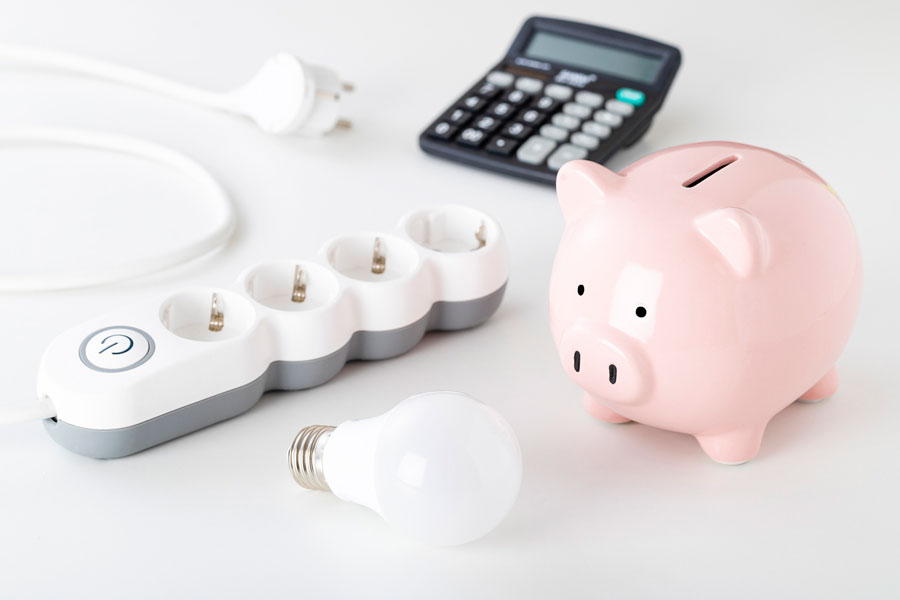
Tips to economise on your electricity bill

Invest in high efficiency apparatuses

Efficiency and economise

Electrical appliances of well-known brands that offer high efficiency are usually more expensive, but since most of them are used daily (such as the refrigerator, the ceramic hob, or the washing machine), at the end of the month, the difference in the electricity bill can be noticed.

Furthermore, by investing in a good appliance, we guarantee that food is conserved for longer, and that the heat from the oven or ceramic hob is not wasted and that you do not have to change them often, since they usually last longer and have fewer electrical and mechanical breakdowns. Discover the guarantees offered by SegurCaixa Adeslas for your electrical appliances with your electrical appliances insurance policy.

Changing your old light bulbs and, especially, all halogens for LED lamps can also help to reduce your electricity bill. You do not have to invest much, and the useful life of these bulbs is highly superior to conventional light bulbs. Discover the additional services included in your home insurance policy, such as the maintenance and handyman service.

Exploit the functionality of electrical appliances

Use your electrical appliances to the maximum. Do not put washing machines and dishwashers on half load. Wait until they are full and that way you will have fewer cycles and use less energy. Furthermore, you can save energy by up to half by putting your wash cycles at 40 degrees instead of 60 degrees. Lastly, the dryer is one of the apparatuses that consumes most electricity, hence in the summer avoid their use and hang clothes outside to dry as far as possible.

Take advantage of residual heat. When the pressure cooker or oven has already reached an elevated temperature, when turning it off, the surplus heat will finish cooking the food without the need to continue using energy.

Do not leave apparatuses on stand-by

Despite the fact the apparatuses are on stand-by, they will continue to consume electricity, so leaving them correctly turned off will help to reduce your electricity bill and, furthermore, any breakdowns due to alterations in the grid when we are not home.

Another solution is to use smart circuit boards, which enable devices to be turned off without the need to unplug them. Remember that linking up various multiple connectors and adaptors can increase the risk of short circuits and fire.

Likewise, it is recommendable to unplug chargers when they are not being used. The difference in the electricity bill will not be noticed much, but we will avoid the risk that such appliances overheat (if they have transformers) and cause possible short circuits.


Conduct a thorough insulation of your home

Walls and windows

With a sound insulation of walls and windows, we will reduce the progressive appearance of condensation and fungi and prevent extreme cold or heat from entering more easily into the home, activating the thermostat and requiring more energy to heat up and cool the home.

Furthermore, avoid blocking radiators with tables or radiator covers that reduce their efficiency and require higher energy consumption to obtain the desired result.

It can also help to place the thermostat in an adequate place: if the sunlight or an air current affect it directly, the reading will not be correct and climate control will be in vain.


Take advantage of sunlight

Choose the most well-lit up rooms

Provided that the orientation of your home allows it, choose the most well-lit up rooms to work and live, instead of darker rooms in which it would be necessary to have lights turned on all day.

SegurCaixa Adeslas home insurance policies have additional guarantees that may be extremely useful to always protect your home and have your home in a tip-top condition. Discover these additional services in your policy.

Furthermore, if you wish to make improvements or conduct specific work at your home, you can contact professionals whose visit will be covered by your policy (labour and materials are charged to the insured party).

What to do if my neighbour does not want to repair a leak?

With a neighbour that does not show interest in mending a leak affecting your home, it is crucial to understand how to address this situation.

Insurance company competencies

Your insurance company cannot handle or repair the facilities of a third party, which does not have a contract with the company, and it must be that third party or their own insurance policy itself that repairs the source of the leak, to subsequently be able to repair the water damage caused.

When a third party causes damage: What to do and how to resolve it

Coping with damage caused by third parties may be complicated. Here we offer you practical tips on how to affront this situation and find practical solutions, especially when the insurer cannot intervene directly.

With your SegurCaixa Adeslas home insurance policy, we can help you if the person causing the leakage refuses to carry out the repair, since we provide the Legal Protection guarantee, through which a team of legal professionals will make an amicable claim, and if the neighbour continues to ignore it, they will study the viability of the claim via the legal route.

After repair: Taking care of your home

Once the problem has been solved, it is vital to take care of your home. SegurCaixa Adeslas takes charge of the resulting damage and we are working to ensure that your home recovers its splendour.

Once the cause of the claim has been repaired, and the damp ceases, SegurCaixa Adeslas will deal with the damage to your home, according to the limits and coverage of your policy, applying the aesthetic recomposition guarantee, if necessary. Subsequently, the expenses assumed by the other insurer or the person that has caused the damage will be recovered so as not to have any impact on the cost and claim ratio of your policy.

Insurance Contract Law (LCS): main things you need to know

Taking out insurance can spring questions to mind, not to mention concerns; or you may simply want to learn more about how it works. What happens if I have an accident? And if something changes halfway through the contract?

The Insurance Contract Law regulates the basic content of insurance contracts while setting forth the rights and obligations of the parties, along with other complementary regulations. This law was passed in the last century and, throughout the years, policyholder protection has needed to be strengthened through other laws, such as the solvency regulations for insurance companies or the Insurance Distribution Directive. 

The Insurance Contract Law regulates all types of insurance: health insurance home insurance, car insurance... It doesn’t matter which one you have or are thinking of taking out. This is why it’s important to be aware of its basic principles. 

What is the Insurance Contract Law and why is it important?

Law 50/1980, of October 8 (LCS), sets forth the legal framework applicable to insurance contracts that guarantees the protection of the interests of the parties, regulating aspects such as:

  • Protection of the insured. 
  • Legal certainty: setting out clear rules on the content, execution, and termination of contracts. 
  • Contractual balance: Regulate the obligations and duties of insured parties and insurers with a view to avoiding inequalities in the contractual relationship.
  • Obligation to compensate: Ensure that the insurer compensates the insured in the event of a claim, within the agreed terms.
  • Regulation of different types of insurance: Distinguish between property insurance (such as fire, theft or civil liability) and personal insurance (life, health, accident, etc.).

To sum up, the Insurance Contract Law ensures a robust legal framework for the parties involved in an insurance contract.

What parties are involved in an insurance contract?

Several parties are involved in an insurance contract, each with a specific role:

  • Insurance Company: It’s the insurance company that, in exchange for paying the premium, undertakes to indemnify or fulfil the agreed benefits should the insured risk be claimed.
  • Policyholder: The person who takes out the insurance and is responsible for paying the premium. It may be the insured himself/herself or he/she may take out the insurance on behalf of someone else.
  • Insured party: The person or entity whose risk is covered by the insurance. This may be the same as the policyholder or a different person.
  • Beneficiary: The person who receives compensation or benefits in the event of a claim. For example, in accident insurance, the beneficiary is usually designated by the policyholder among his/her family members or partner.

What must a policy contain?

As a minimum, the policy must contain the following:

  1. Identification of the Parties: Name and address of the insurer, policyholder, insured and beneficiary (if applicable).
  2. What is being insured: Clear description of the object or event insured.
  3. Nature of the risk covered: Details of the guarantees and coverage granted, as well as exclusions and limitations highlighted typographically.
  4. Designation of the insured objects and where they are located: The location of material assets must be specified.
  5. Insured sum or scope of the coverage: Indication of the maximum limit of compensation or benefit.
  6. Amount of the premium, surcharges and taxes: Insurance cost and payment conditions.
  7. Expiry of the premiums, place and method of payment: Dates and methods of paying the premium.
  8. Duration of the contract: Stating the start and end of the coverage, with exact date and time.
  9. Mediator intervention: If there is a mediator in the contract, their name and type of mediation must be included.

All of the foregoing points are regulated in the general and specific conditions of the insurance, which must be drafted in a clear and precise manner.


What prior information must the insurer provide me before I sign the contract?

In case you were unaware, the regulations complementing the Insurance Contract Law have expanded the information required to be provided to the policyholder prior to taking out the insurance, requiring the insurer to provide the policyholder with the following information before signing the contract:

  • Insurance Product Information Document (IPID): This is a standardised document across the European market that provides consumers with key information about an insurance product before a contract is finalised.
  • Pre-contract information note: this document provides you with general information about the product you are about to purchase.

 The foregoing documents contain information related to:

  • Contract conditions.
  • Summary of the limitation and exclusion clauses that must be specifically accepted in writing at the time of taking out the insurance.
  • Duration.
  • Premiums and payment frequency.
  • Information on policy cancellation options. 

This preliminary phase allows the policyholder/insured to make informed decisions and understand what the insurance entails before taking it out.

What are the rights and obligations of each party?

When taking out insurance, the policyholder and the insurer take on specific commitments that both parties must be aware of. Below is a description of the main obligations in each case:

Obligations assumed by the policyholder/insured

  • Truthfully provide information on the risk, duly filling in any questionnaire the insurer may ask you to fill in, if applicable.
  • Notify any change in circumstances that may increase the risk compared to those initially reported. This obligation shall not apply to health insurance or accident insurance. 
  • Pay the premium instalments agreed.
  • Report the claim within 7 days.

Obligations assumed by the insurer

  • Issue the policy and deliver the complete documentation.
  • The insurer must compensate the insured in the event of a claim within the agreed limits.

As you can see, being aware of what the Insurance Contract Law entails isn’t just a matter for lawyers, insurers, or specialists. This is a useful tool for anyone who has taken out insurance or is thinking about taking it out. Understanding what a policy includes, what you can demand, and what is expected of you as the policyholder will give you greater peace of mind.

Subscribe to